From the Boardroom to the Backline: What English Hockey Clubs Can Borrow from the Professionals

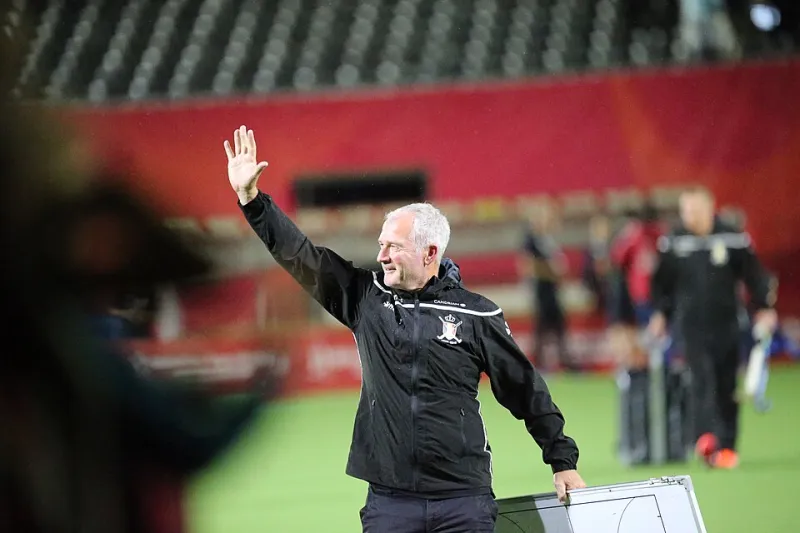
Photo: Xsantolaria, CC0, via Wikimedia Commons
The gap between professional sport and the village hockey club has always been vast — but it is narrowing, and not in the way you might expect. The most interesting developments in English club hockey over the past five years have had little to do with playing budgets. They have concerned governance, welfare, communication and the unglamorous machinery of retention.
Clubs that once ran on a committee of four and a WhatsApp group are now appointing welfare officers, mapping junior-to-senior pathways and treating volunteer recruitment with the seriousness a professional club would reserve for a marquee signing. The question worth asking is not whether this professionalisation is happening, but which parts of it a small club can actually afford.
The Retention Cliff Edge
Every club secretary knows the pattern. The 23-year-old, three seasons out of university, moves cities for work, finds the new club's training night clashes with a late finish at the office, and quietly stops replying to messages. Within two years they are playing five-a-side instead, and the sport has lost them.
Professional organisations solved this problem long ago with onboarding, mentoring and deliberate communication. The hockey clubs doing best at retaining their post-university intake have borrowed the playbook almost wholesale: a named contact before the new joiner's first session, a social fixture in the first month, and — crucially — a genuine conversation about what the player wants from their season, whether that is first-team hockey or simply a run-around and a pint afterwards.
It costs nothing. It is, nevertheless, the single most common point of failure at smaller clubs.
Volunteers Are a Workforce, Not a Favour
The second borrowing is cultural. Larger clubs have begun treating volunteering as workforce management rather than a perpetual scramble. That means role descriptions, term limits, handover documents and — the real innovation — saying thank you in a way that people remember.
The practical steps are modest. A one-page description of what the fixtures secretary actually does, so a successor can pick it up. A fixed two or three-year term so the role doesn't calcify around one exhausted volunteer. A recognition moment at the end-of-season dinner that isn't an afterthought. None of this requires funding; all of it requires intention.
Smaller clubs sometimes assume this bureaucracy is a luxury of the big organisations. The evidence suggests the opposite — it is precisely the clubs without deep benches of volunteers who can least afford to lose one without a succession plan.
Welfare and Safeguarding as Infrastructure
No area of club life has professionalised faster than welfare. The appointment of trained welfare officers, codes of conduct, and structured safeguarding for junior sections has moved from best practice to baseline expectation, driven partly by national governing body requirements and partly by parental expectation.
Clubs that have invested here report a secondary benefit: parents trust the junior section, stay for the senior sections, and frequently pick up a stick themselves. The welfare officer, once seen as a compliance burden, has become an unexpected recruitment channel.
The Pathway as a Product
Finally, the junior-to-senior pathway. The strongest clubs no longer treat this as a happy accident but as a designed journey, with named transition points: under-16s training with the thirteens, a buddy system for the first senior season, a second XI captain explicitly tasked with developing rather than merely fielding young players.
Social media belongs in the same conversation. A modest Instagram presence documenting junior achievements does two jobs — it signals to parents that the club is a serious environment, and it keeps the 22-year-old dropout, scrolling from their new city, aware that the door remains open.
What to Do on Monday
For a club committee meeting this week, the actionable list is short. Appoint someone to own the new-member experience. Write down what each volunteer role involves. Check the junior-to-senior handover has a named person at both ends. Post something.
None of it is glamorous, and none of it is hockey. All of it, increasingly, is what separates the clubs that grow from the ones that simply survive.