Twenty Seasons and Counting: What Keeps Club Hockey's Longest Servers Turning Out Each Weekend
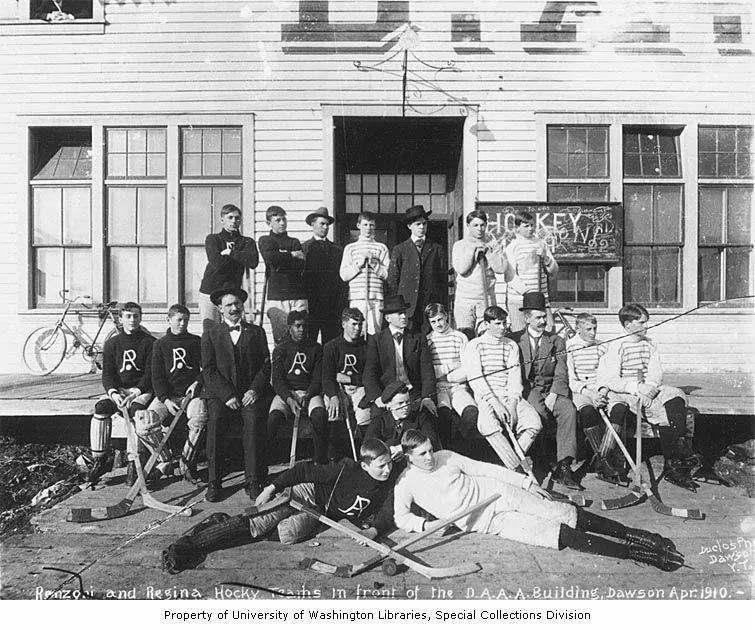
Photo: J. E. N. Duclos, Public domain, via Wikimedia Commons
There is a particular kind of heroism in English club hockey that rarely makes the match report. It belongs not to the striker who notches four in a promotion push, but to the 44-year-old inside left who has driven 90 minutes each way every Saturday since 1998, van packed with spare sticks and a first aid kit she bought herself.
Ask around any league in the country and you will find them: the players who have turned out for the same club for twenty seasons or more. Their names are on the honours boards, their sons and daughters have come through the junior section, and their secret, it turns out, is less about fitness than about logistics.
The Sunday Problem
The weekend fixture list is the first battlefield. Pushback times have crept earlier and earlier as pitch hire costs have risen, and a 9am start on a Sunday morning collides head-on with the realities of family life.
Margaret Ellison, now 51, has played for her club in the Midlands since 2001. Her approach is unapologetically pragmatic.
"I made an agreement with my husband in year two," she says. "Hockey is mine until half eleven on a Saturday, and everything else is ours after. That deal has never been broken, not once. If you don't negotiate it early, you end up resenting the fixture list."
Others take a different route entirely. Several veterans we spoke to deliberately chose clubs with strong family sections, so that Saturday mornings became a shared enterprise rather than a source of friction. One player described watching her daughter's under-12 match from the sideline before pulling on her own shirt for the 12.30 slot — a double-header of commitment that has become the norm at dozens of clubs across the country.
The Money Question
Few people talk honestly about what club hockey costs. Between annual subs, match fees, a new stick every couple of seasons, astros and the ever-present collection for away travel, a committed season can comfortably run into four figures.
The veterans' advice here is consistent: ask early, ask once, and don't suffer in silence. Most clubs now operate hardship funds or staged payment schemes, but they are rarely advertised. The players who last are the ones who raise their hand in September rather than disappearing in November.
Buying second-hand kit from the club's end-of-season sale, car-sharing to away fixtures and volunteering in lieu of part of your subs are all well-worn tactics among the long-servers. One club captain we spoke to keeps a spreadsheet of lift shares that has been running, in various forms, since 2007.
Staying on the Team Sheet
Selection, for the veteran, is a negotiation with the body. The players who endure tend not to be the most talented, but the most available. A reliable player who turns up to Tuesday training and plays whatever the weather is worth more to a mid-table side than a brilliant one who appears four times a season.
The practical wisdom passed down through the generations is remarkably uniform. Warm up properly, even when the young ones don't. Accept that you will no longer cover the full pitch and learn to defend a smaller one intelligently. Ice what hurts. And when the club asks for a volunteer to umpire the second-team fixture, say yes — visibility, it turns out, is a form of job security.
There is also a quieter point about role. The survivors have all, at some point, accepted a demotion of sorts: from first team to second, from central midfielder to sweeper, from star to mentor. Those who fight the drift out of the side tend to leave the sport altogether. Those who embrace it often find their best years come afterwards.
Why It Matters
Clubs would do well to look after these players. They are the institutional memory of the English game — the people who know why the lease on the pavilion is structured the way it is, who can be trusted with the subs tin, and who will still be there when the university intake graduates and moves to Manchester.
For anyone wondering whether they can keep this going alongside everything else: the veterans' collective answer is yes, but only deliberately. The game does not ask for your whole life. It asks for your Saturday morning, your Tuesday evening and a bit of honesty about what you can afford.
Twenty seasons in, that still feels like a fair trade.