The Unsung Elevens: Why Your Club's Lower Sides Deserve the Spotlight
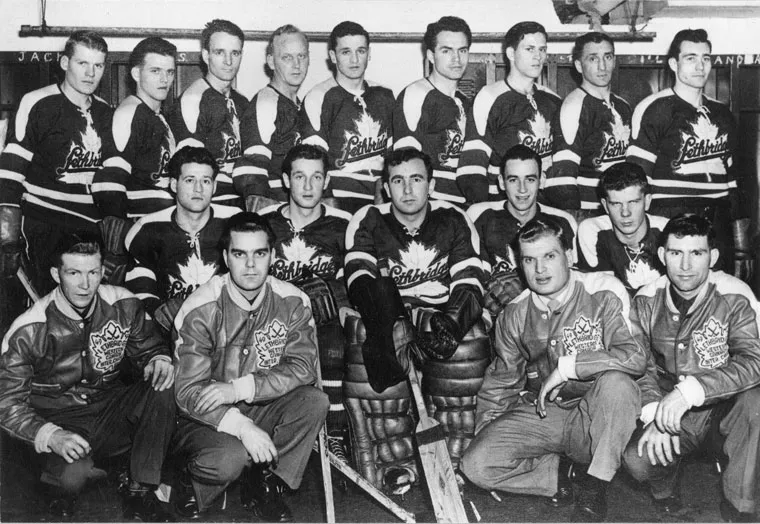
Photo: Galt Museum & Archives on The Commons, No restrictions, via Wikimedia Commons
Every Saturday, in towns and cities across England, they turn out in their dozens. The second XI, marshalled by a captain who organises the team sheet on a WhatsApp group she never asked to run. The third XI, whose average age spans four decades and whose midfield contains a father-and-son pairing. The fourth XI, filled with returning players, promising juniors and one stalwart who has worn the club shirt since before the pitch had a carpet.
They are the backbone of English club hockey. And in most club communications — the match reports, the social media feeds, the annual dinner speeches — they are very nearly invisible.
The Arithmetic of Belonging
Consider the composition of a typical English hockey club. A single first team fields eleven players. A club running six senior sides fields sixty-six — plus substitutes, plus the umpires, plus those rotating through on development caps. The majority of any club's senior membership plays its hockey below the first team. Yet the overwhelming share of a club's public-facing energy, from match reports to photographs to committee airtime, is devoted to the one side whose results appear highest up the league tables.
This is not a criticism of first teams, whose achievements deserve every column inch. It is an observation about incentives. A player who joins a club, works their way into the third XI and gives six seasons of commitment deserves to feel that their contribution is seen. When the only match report published each week is for the firsts, the message sent to everyone else is unintended but unmistakable: your hockey does not count.
Retention data across community sport tells a consistent story — people stay where they feel valued. For clubs worried about dropping membership numbers, the cheapest intervention available is not a new pitch or a new coach. It is a paragraph about last week's 3–2 thriller in the 4th XI.
The Talent Pipeline Nobody Mentions
There is a second, less obvious argument, and it concerns the talent pathway. Lower XIs are where development genuinely happens. The 17-year-old making her senior debut at right back for the 4s. The former first-teamer returning from injury with the 3s. The late starter, aged 28, who took up hockey at university and is improving faster than anyone realises.
Coaches and selectors know that the pathway from junior hockey to representative honours does not run exclusively through the first team. It runs through every side, every week. A club that publicises only its top team is, in effect, telling its developing players that their progress matters only once it becomes newsworthy — which is precisely backwards.
A Checklist for Chairmen
For committees willing to act, the remedy is refreshingly inexpensive. We would suggest the following as a starting point:
- Publish a match report for every senior side, however brief — three sentences and a scoreline is infinitely better than silence.
- Rotate the club's social media spotlight, ensuring each team features at least monthly, with photographs and a player nomination.
- Budget for kit equally. If the firsts have matching shirts and the 4s are wearing a motley of borrowed colours, the hierarchy is being communicated before a ball is pushed.
- Name captains and top scorers from lower teams in the annual review, alongside first-team honours.
- Invite a lower XI captain to speak at the annual dinner. The stories are often better, and the room will love it.
- Track and celebrate milestones — 100th appearance, first goal, first clean sheet — across every team, not just the top of the club.
None of this costs more than a few hours of volunteer time. All of it signals that the club belongs to everyone who pulls on the shirt.
A Culture Worth Defending
English hockey has always traded on its inclusivity — the sense that anyone, of any standard, can find a team and a place. That promise is only credible if the club's culture reflects it in practice. The lower XIs are not a support act for the first team; they are the club itself, in its truest and most numerous form.
So this weekend, when the results come in, spare a thought for the 3rd XI's 2–1 win that nobody wrote about. Better still — write about it. The players will notice. And they will come back next week, which is, in the end, the whole point.