Eight Minutes to Change the Game: Inside the Half-Time Talk at Every Level of English Hockey
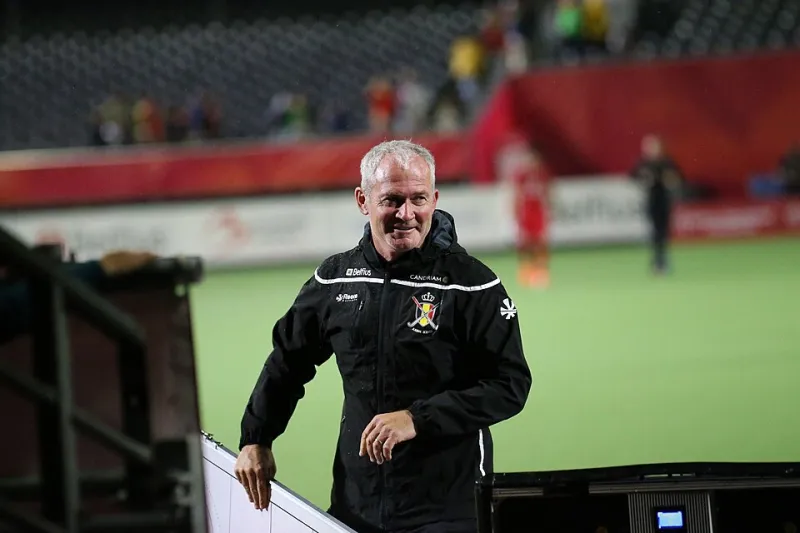
Photo: Brieucverstreken, CC BY-SA 4.0, via Wikimedia Commons
The Quietest Eight Minutes in Hockey
Spectators drift to the tea hut. Umpires compare notes. Players unwrap halves of oranges. For roughly eight minutes at the midpoint of every match in England, from the Premier Division to regional leagues, the game pauses — and for coaches, that pause is often worth more than any training session.
The half-time talk occupies a peculiar place in hockey culture. Football borrows much of its mythology from the dramatic dressing-room tirade, but hockey's interval is shorter, more exposed and, at most clubs, conducted within earshot of the opposition. What is said in those few minutes — and how it is said — can reshape the second half entirely.
Grassroots Theatre
At club level, the interval talk retains something of the theatrical. Coaches describe a spectrum running from quiet encouragement to full-blooded motivation, often within the same fixture.
"There are Saturdays when I've barely finished my sentence before the whistle goes," says one long-serving coach at a Midlands club, speaking on condition of anonymity because, as he puts it, "some of what I say isn't for publication." "Other weeks you spend five minutes just calming people down. The talk isn't one thing. It's whatever the scoreboard and the body language tell you it needs to be."
That improvisational quality is common. Grassroots coaches rarely have performance data to hand; they work from what they have seen, what they know of their players, and an instinct honed over decades of standing on the touchline. The result can be blunt, occasionally unrepeatable, and — by their own admission — not always effective.
"I've given the same team talk twice and had two completely different second halves," one North West league coach admits. "That tells you the words matter less than the moment."
The Elite Approach: Calm, Structured, Evidence-Led
Performance-level environments present a striking contrast. Coaches operating within England's talent programmes describe a far more disciplined structure: three or four key messages, agreed in advance, delivered without raised voices.
The shift reflects broader changes in elite sport. Video analysis, positional data and half-time statistics allow coaches to separate what actually happened from what it felt like on the pitch. Where a grassroots coach might demand more effort, a performance coach might identify that the press was being bypassed down one particular channel and adjust the defensive shape accordingly.
"The biggest lesson I learned moving up the levels was to say less," one coach within the talent pathway explains. "At club level you can talk for eight minutes. At performance level, if you can't make your point in ninety seconds, you've lost them. Players want clarity, not oratory."
That brevity is deliberate. Research across team sports consistently suggests players retain only a fraction of verbal instruction under fatigue, and hockey's interval is compressed further by the need to rehydrate and reset. Elite coaches therefore prioritise one or two actionable changes over comprehensive review.
What Actually Turns a Match
Asked what distinguishes a productive interval from a wasted one, coaches across the levels converge on a handful of principles.
Timing before content. Several coaches describe spending the first minute simply reading the group — heads up or heads down, argumentative or withdrawn — before deciding whether the message should be tactical or emotional.
Ownership. The most effective talks, many argue, are not delivered by the coach at all. Empowering senior players to lead the discussion, particularly at club level, produces buy-in that no amount of clipboard authority can manufacture.
One change, not ten. Whether the tool is a tactical tweak or a change of temperament, successful coaches resist the temptation to fix everything at once. A single clear adjustment — a switch of marking responsibilities, a higher starting position for the inside forwards — gives the team something concrete to execute from the first whistle of the second half.
Honesty without blame. The interval talk that unravels a side is rarely the loud one; it is the one that assigns fault. Coaches who survive longest in the game speak of addressing systems rather than individuals, however tempting the latter might be.
The Gap Between the Levels
The contrast between grassroots and elite practice raises a question the coaching community continues to debate: should club coaches adopt performance-level methods, or does the amateur game demand its own approach?
England Hockey's coaching resources increasingly emphasise communication and session design alongside technical content, and many club coaches have embraced the shorter, sharper model. Yet the volunteer coach managing a mixed-ability squad on a Saturday afternoon faces constraints no performance coach would recognise — no substitutes' bench analysis, no video, no second chance if the message lands badly.
Perhaps the answer is that the best interval talks share a quality independent of level: they meet the team where it is. A national league side may need a tactical adjustment delivered in measured tones; a fourth XI trailing 3–0 in the rain may need something closer to a pep talk and a reminder of why they turned out at all.
Eight Minutes, Well Used
For all the analysis, the half-time talk remains part craft, part theatre and part educated guess. What is certain is that it is not dead. Coaches across England continue to treat those eight minutes as the most concentrated coaching opportunity of the week — a brief window in which a match can be redirected, a confidence rebuilt, or a season quietly turned.
The next time the players disappear indoors and the touchline falls quiet, spare a thought for what is being said. It may be a data-informed adjustment or an unscripted appeal to pride. Either way, the second half often begins in that room, not on the pitch.