Three Games in Seven Days: Inside the Scheduling Squeeze Stretching England's Club Hockey to Breaking Point

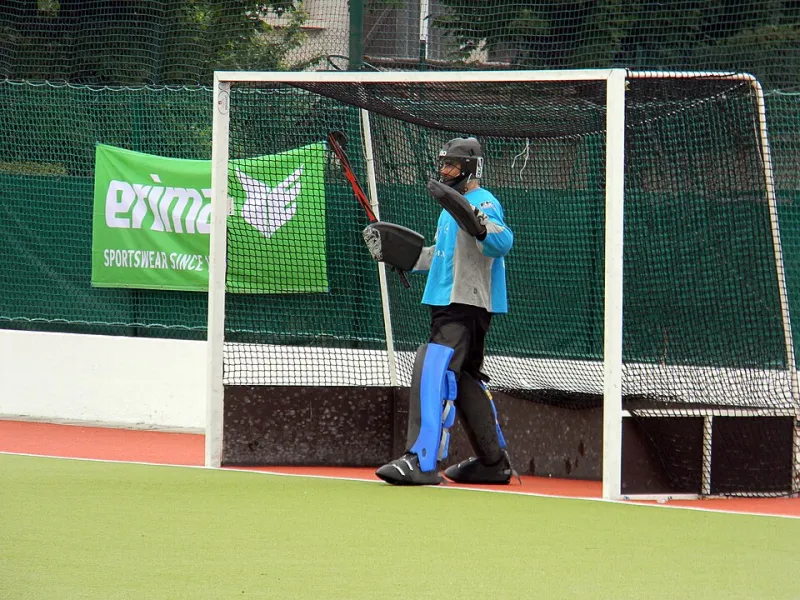
Photo: Unknown, CC BY 2.5, via Wikimedia Commons
Ask any club captain in England what their October looked like and the answer is rarely a gentle one. A Saturday league fixture, a Sunday cup tie, a Tuesday evening trip across two counties — then back to the league the following weekend. Across the country, players at every level of the pyramid are being asked to turn out three times in a single week, and the question echoing around clubhouses from Surbiton to Durham is a simple one: how long can this hold?
The Scale of the Problem
England Hockey's competitions structure now encompasses well over 4,000 affiliated matches per season, spread across regional leagues, national competitions and cup fixtures. That volume is, on one level, a sign of health — the game is being played, week in and week out, in every corner of the country. But the arithmetic underneath is less comfortable.
League calendars have to accommodate international windows, winter pitch closures, and the perennial English enemy of waterlogged surfaces. When matches are postponed — and every winter, they are — they are slotted into midweek evenings or Sunday gaps, compounding an already dense schedule. The result is that congestion is not evenly distributed: it lands heaviest in February and March, precisely when pitches are at their worst and bodies are at their most fatigued.
"By the time you get to the back half of the season, you're not really training anymore," says one National League captain, who asked not to be named. "You're managing. You're managing minutes, you're managing niggles, you're managing whether your centre-half can get out of work on a Tuesday."
Who Pays the Price
The most obvious casualty is the body. Physiotherapists working with club sides report a familiar pattern: soft-tissue injuries cluster in the weeks following fixture pile-ups, as recovery windows between matches shrink from days to hours. Unlike professional sport, there is no rotation policy at a Saturday club — the same eighteen players are simply asked to go again.
But the human cost extends beyond the treatment table. Midweek fixtures demand late finishes, long drives and early alarms. For players with young families or inflexible employers, a Tuesday night away fixture in the depths of February is not an inconvenience; it is a tipping point. Several club administrators spoken to for this piece identified scheduling — not cost, not facilities — as the single biggest driver of mid-season drop-out in their adult sections.
There is a knock-on effect at youth level too. Junior players progressing into adult sides find their development interrupted by fixtures their parents cannot realistically support on a school night, complicating the pathway from colts hockey to senior selection.
What the Administrators Say
League officials are, by and large, sympathetic but constrained. The fixture calendar is a puzzle with too many pieces: fixed league sizes, mandated completion dates, cup rounds and international commitments all competing for the same weekends. Postponements are not a scheduling failure so much as a scheduling certainty — and the system has no slack built in to absorb them.
Some leagues have experimented with solutions. Split seasons, earlier starts to accommodate weather windows, and staggered push-back times for midweek fixtures have all been trialled in various regions with mixed results. The consensus among administrators is that no single fix exists — but that the current model's tolerance for congestion is close to its limit.
Realistic Fixes
Few in the game argue for fewer matches; the appetite to play is the sport's greatest asset. What clubs and physios consistently call for is smarter distribution:
- Protected recovery windows, ensuring no side plays three matches within seven days more than a set number of times per season.
- Earlier publication of reserve dates, so clubs and employers can plan for midweek fixtures months in advance rather than days.
- Regional clustering of midweek fixtures, reducing travel burdens on weeknights when time is scarcest.
- Formal guidance on player load, giving coaches and captains an evidence-based framework for managing minutes across congested spells.
None of these require structural upheaval. They require coordination, and a recognition that fixture lists are not merely administrative documents — they are a determinant of who stays in the game and who walks away.
The Stakes
England Hockey's participation figures have been a genuine source of encouragement in recent years, with growth driven by thriving club communities. Protecting that growth means protecting the people who sustain it: the club captain driving a minibus on a wet Wednesday, the volunteer physio taping ankles at 6pm, the eighteen-year-old deciding whether senior hockey fits around her life.
Fixture congestion is not the most glamorous issue in English hockey, but it may be among the most consequential. The sport's leagues are fuller than ever. The question now is whether the calendar can be made to serve the players — rather than the other way around.