From Extra Time to Shoot-Outs: Nine Tweaks That Rewrote English Hockey
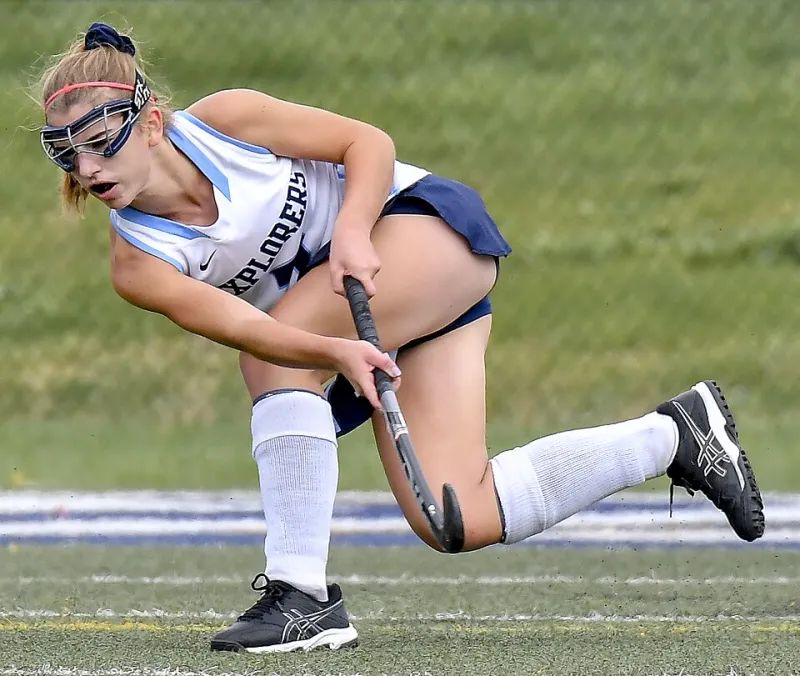
Photo: K.M. Klemencic from Hudson, Ohio, CC BY 2.0, via Wikimedia Commons
Watch grainy footage of English hockey from the early 1970s and you might struggle to recognise the sport. Slower, more physical, structured around set positions and a rigid offside line — it was a different game played with the same stick and ball. The sport's administrators, to their credit, have never been afraid to tinker. Here are nine changes that made modern hockey what it is.
1. The Offside Rule Abolished (1987, refined 1996)
Few changes have so thoroughly reshaped a sport. Removing offside opened the pitch end to end, stretched defences and created the space that today's high-tempo counter-attacking depends on. Purists grumbled that it devalued defensive craft; the spectacle won the argument.
2. Rolling Substitutions (1970s onwards)
Once, a substituted player was gone for good. The gradual adoption of rolling subs turned hockey into an endurance-based squad game, and made the bench — and the fitness coach — central to elite success. Every international squad rotation you see today traces back here.
3. The Penalty Corner Evolves (repeatedly)
From restrictions on the number of defenders behind the line to the requirement that the ball leave the circle, the penalty corner has been endlessly recalibrated in the battle between attack and defence. Each tweak reshaped drag-flicking technique, and with it, an entire generation of specialist coaching.
4. Edge Hitting Legalised (2004)
Allowing the edge of the stick to strike the ball seemed a minor technicality. In practice, it unlocked reverse-stick shooting and passing angles that defenders are still learning to cover. Watch any Premier Division highlight reel for the consequences.
5. The Self-Pass Arrives (2009)
Perhaps the most contentious change of the modern era. Suddenly, the player taking a free hit could play it immediately, and the game's tempo transformed overnight. Early seasons were chaos — players standing beside the ball, defenders retreating in confusion. Now it is simply how hockey is played, and junior coaching has been rebuilt around it.
6. Own Goals Permitted — Then Reversed (2011–2012)
A brief, much-mocked experiment allowed goals to be scored off a defender's stick. It lasted barely a season before common sense prevailed. A useful reminder that not every experiment earns its place.
7. The Two-Minute Green Card (2012)
Elevating the green card to a suspension gave referees a genuine intermediate sanction between warning and yellow. Discipline improved; so did the spectacle. Officials at county level will tell you it remains one of the most useful tools in the book.
8. Shoot-Outs Replace Extra Time (2010s)
When knockout hockey needed a decisive finish, the eight-second one-on-one duel replaced prolonged extra time. Dramatic, telegenic and — crucially for clubs at every level — now a weekly training-ground staple. Ask any keeper whether they'd rather face a shoot-out or a penalty corner flick and watch the wince.
9. The Quartered Match Trial (2018)
Splitting internationals into four quarters, with extended breaks, changed substitution patterns and conditioning at the elite level. Whether it trickles down to club hockey permanently remains debated, but its influence on how fitness is coached is already visible across the talent pathway.
Why It Matters on a Saturday
Stand on the touchline at any club fixture this weekend and every one of these changes is on display: the self-pass taken in a heartbeat, the reverse-stick shot from an impossible angle, the green card brandished for a cynical tackle. Hockey's willingness to evolve — sometimes clumsily, often bravely — is precisely why it remains one of the most watchable and fastest-developing team sports in the country.
The next tweak is always coming. That, arguably, is the one rule that never changes.