No Whistle, No Game: The Quiet Exodus of England's Hockey Umpires
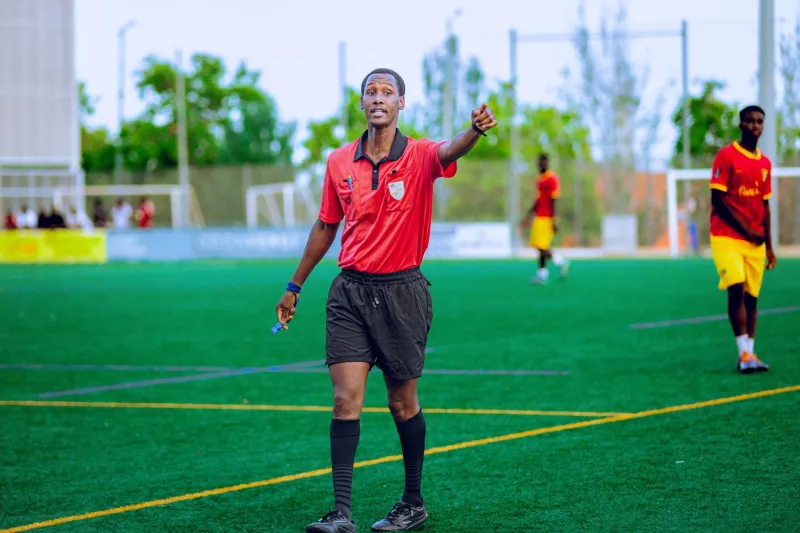
Every Saturday across England, roughly 1,500 league fixtures get underway on time because somebody volunteered to stand in the cold for seventy minutes and make decisions nobody will thank them for. Take those people away, and the fixture list collapses. There is no Plan B.
The problem, according to those who administer officiating at county level, is that the supply of qualified umpires is shrinking while the demands placed upon them grow. Several county appointing secretaries describe the same pattern: a pool of officials heavily weighted towards the over-50s, too few new candidates coming through, and a retention problem driven less by a lack of interest than by a lack of respect.
A Numbers Game Nobody Is Winning
Appointing an umpire for a mid-table league fixture sounds straightforward until you try it. One Midlands appointing secretary, who asked to speak generally rather than be named, estimates she spends six to eight hours a week matching officials to fixtures — a task made harder each season as colleagues step down.
"You get to November and you're ringing people who've already said they're tired," she says. "You don't want to be the person who pushes somebody out of the game altogether. But if you don't fill the appointment, the match doesn't happen."
The arithmetic is unforgiving. A club fielding four sides on a Saturday needs, at minimum, two neutral or self-appointed officials per fixture under most league regulations. Clubs that cannot supply a qualified umpire face fines or deductions. Yet the qualification pathway — from level one through to the county and regional badges — takes time, costs money and, crucially, requires the candidate to believe the role is worth the hassle.
Many, increasingly, do not.
The Slow Drip of Disrespect
Talk to grassroots officials and the stories cluster around a theme: not dramatic confrontations, but the slow drip of sighs, shrugs and muttered verdicts from the sideline. One level-two umpire in the Home Counties describes a league match where the losing side's captain spent the final quarter questioning every decision within earshot of both benches.
"Nothing reportable, technically," she says. "Just relentless. You drive home thinking, why am I giving up my Saturday for this?"
Formal abuse is rare and, where it occurs, leagues can act. The harder problem is the ambient negativity that never crosses the threshold for a report but accumulates all the same. Umpiring is also, by its nature, solitary. Officials travel alone, change alone and often leave alone. Compare that with the social fabric that keeps players at a club for decades — the teas, the post-match pints — and the retention gap becomes obvious.
Burnout completes the picture. Appointing secretaries report officials covering two, sometimes three fixtures a weekend because there is nobody else. The sport's own safeguarding and respect campaigns have helped at the margins, but culture change at pitch level has been slower to arrive.
What Clubs Can Actually Do
The encouraging news is that the most effective remedies are local, cheap and within the gift of any committee. Based on interviews with officials and administrators, a practical programme might include:
- Sponsor the qualification. Pay the course fee and assessment costs for two volunteer members a season. A level one course typically costs less than a set of playing shirts.
- Pair, don't plonk. Never send a newly qualified umpire to a fixture alone. Buddy them with an experienced official for their first season, and debrief over a cup of tea rather than in the car park.
- Rotate the honour. Some clubs require every playing member to umpire a set number of lower-team fixtures a season. It spreads the load and, usefully, teaches players how difficult the job is.
- Protect the whistle. Adopt a written code of conduct covering behaviour towards officials, and be seen to enforce it — including with your own first-team captain.
- Make it social. Cover mileage, buy the lunch, ensure the umpire is in the clubhouse afterwards, not heading straight to the car.
Clubs that have adopted measures like these report something counterintuitive: umpiring can be a recruitment asset. Former players who no longer want the physical demands of league hockey often relish staying involved, provided they feel valued.
A Crisis With a Deadline
Nobody interviewed for this piece believes English hockey is yet at breaking point — but several used the phrase "within a decade" unprompted. The demographic profile of the officiating workforce, the rising volume of fixtures and the steady attrition of volunteers point in one direction unless something changes.
The whistle, in the end, is infrastructure. It deserves the same attention clubs give their pitches, their coaching provision and their junior sections. The alternative is a Saturday morning, somewhere in England, when a fixture is called off for the simplest and most avoidable of reasons: nobody was willing to blow the whistle.