Saturday League, Sunday Call-Up: How England's Scouts Are Mining the Second XIs

Photo: El Otro Monstruo, CC0, via Wikimedia Commons
For decades, the unwritten rule of English hockey was simple: if you wanted to be seen, you played Premier Division hockey on a Sunday. The regional leagues were where careers were maintained, not launched, and the second teams of even the biggest clubs were largely invisible to anyone holding a clipboard.
That assumption is quietly being dismantled. Since England Hockey widened its regional scouting network eighteen months ago, performance scouts have been instructed to look beyond the showcase fixtures — and the results have been striking. Three players currently involved in England age-group and development squads were playing second-team league hockey at the start of last season.
Watching the Unwatched
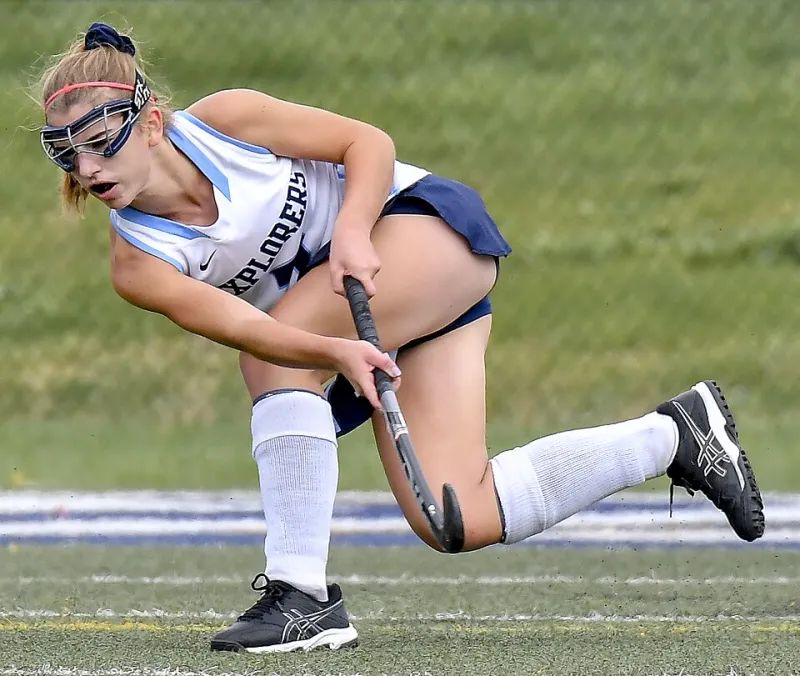
Among them is a nineteen-year-old midfielder from the East Midlands who, until last October, was turning out for her club's second XI in a Division One North fixture watched by perhaps forty spectators and one very attentive scout.
"She was the best player on the pitch by some distance, but what marked her out was her scanning," the scout who first flagged her recalls. "Every time she received the ball, she'd already decided where the next pass was going. You can coach a lot of things. You can't coach that habit at twenty-three, never mind nineteen."
Within six weeks she had attended a regional talent centre assessment; by February she was training with a development squad. Her club, she admits, barely had time to process it. "One Saturday I was marking a forty-year-old centre-back in the league. The next weekend I was in a kit with three lions on it. It hasn't quite sunk in."
A Deliberate Change of Emphasis
The expansion of the scouting network is not accidental. Talent pathway staff have been candid that the traditional identification routes — junior representative honours, academy sessions, Premier Division exposure — risk missing late developers and players who never entered the pathway system at all.
The revised approach asks scouts to attend second-team and lower-league fixtures deliberately, particularly in regions where performance infrastructure is thinner. Scouts are briefed to assess game intelligence, work rate without the ball and adaptability across positions — qualities, they argue, that translate across standards in a way raw technical polish sometimes does not.
The logic is straightforward. A second-team fixture at a big club often features a first-team squad player returning from injury, a promising junior stepping up, and a seasoned club servant who knows every trick in the book. Reading how a young player performs in that scrappy, congested environment, scouts say, tells you more than a comfortable win against peers ever could.
What It Means for the Saturday Player
For clubs across the country, the message is both encouraging and demanding. Encouraging, because the pathway is now genuinely open in a way it has not been previously — a strong season in the regional leagues can lead somewhere. Demanding, because clubs are being asked to flag promising players to regional hubs rather than assuming someone else will do it.
Club coaches have a role to play too. Simple habits matter: ensuring matchday information reaches the county network, allowing talented second-teamers to guest at higher levels where rules permit, and resisting the instinct to keep a star player hidden in the seconds to guarantee wins.
The players themselves are pragmatic. None of the three we spoke to believed they would have been found under the old system. All three stressed the same thing: keep playing, keep competing, and treat every fixture — however unglamorous — as an audition.
The terraces at a second-team fixture on a cold Saturday afternoon in January may seem an unlikely spot to find England's next midfielder. Increasingly, that is precisely where the scouts are standing.